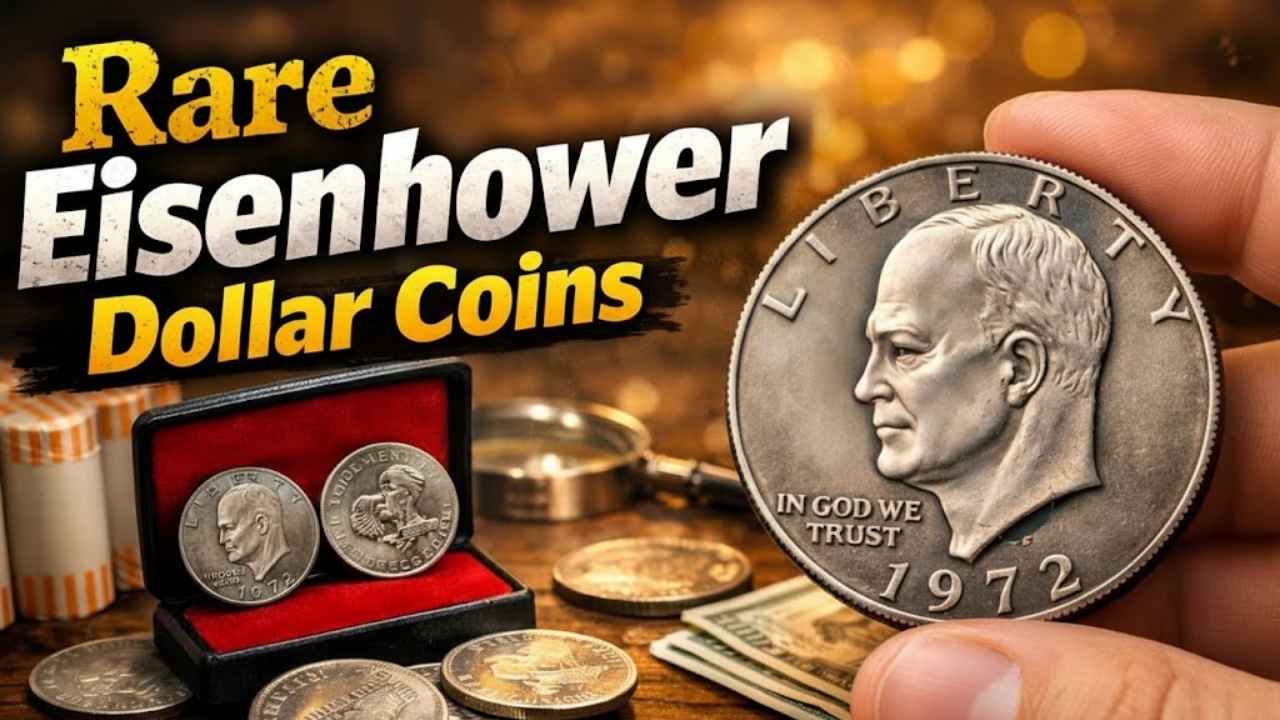
Rare Eisenhower Dollar Coins 2026 The Eisenhower Dollar was minted between 1971 and 1978, marking the first U.S. dollar coin issued after the Peace Dollar series ended in 1935. It honored President Dwight D. Eisenhower on the obverse and commemorated the Apollo 11 Moon landing on the reverse. Produced in Philadelphia, Denver, and San Francisco, the coin appeared in both copper-nickel clad and 40% silver versions. Though unpopular in circulation due to its size, it has become a favorite among collectors.
Key Rare and Valuable Eisenhower Dollar Varieties
Collectors target specific dates and mint marks, especially in high grades or special finishes. Notable examples include the 1971-S silver proof and uncirculated issues, the rare 1972 Type 2 reverse, the 1973-S silver proof, the 1974-S deep cameo proof, Bicentennial Type 1 and Type 2 varieties, and high-grade 1978-D mint state coins.
Value Chart of Rare Eisenhower Dollars
| Year & Mint | Variety or Feature | Estimated Value Range | Collector Appeal |
|---|---|---|---|
| 1971-S | Silver Proof | $45 – $75 | First-year silver issue |
| 1972 | Type 2 Reverse | $350 – $600 | Distinct globe design |
| 1973-S | Silver Proof | $40 – $65 | Scarce proof strike |
| 1974-S | Silver Proof Deep Cameo | $300 – $500 | Premium cameo finish |
| 1976-S | Bicentennial Silver Proof | $35 – $60 | Historic dual-date design |
| 1978-D | High Grade MS67 | $200 – $350 | Final year issue |
Condition and Grading Impact
Condition plays a major role in value. Eisenhower Dollars are graded on the Sheldon scale, with Mint State 65 and above commanding strong premiums. Deep cameo proof designations, strike quality, luster, and absence of contact marks all influence desirability. Professional certification by third-party grading services increases buyer confidence and resale potential.
Updated 2026 Price Chart
High-grade examples of key issues continue to perform well in the collector market. Ultra-high-grade certified specimens can exceed published estimates depending on auction demand and rarity confirmation.
What Makes Certain Eisenhower Dollars Rare
Rarity is influenced by low mintages, survival rates in high condition, silver content, reverse design variations, and certification population reports. Coins preserved in original government packaging often maintain stronger premiums.
Silver Content and Investment Value
The 40% silver Eisenhower Dollars, primarily struck at the San Francisco Mint, contain approximately 0.3161 troy ounces of silver. Their value reflects both intrinsic silver content and numismatic premium. While clad circulation strikes usually trade near face value unless in high grade, silver issues carry steady bullion-backed worth.
Tips for Collectors in 2026
Collectors should focus on certified high-grade examples, target key varieties like the 1972 Type 2, preserve coins in climate-controlled storage, avoid cleaned specimens, and track auction results for accurate pricing trends. Patience and careful selection remain essential for building a premium set.
Are Eisenhower Dollars a Good Investment
Eisenhower Dollars occupy a niche between modern bullion coins and classic silver dollars. Rare varieties and top-graded specimens have shown steady long-term growth. Collectors value them for historical significance, large-format appeal, affordability, and variety-based challenges. Strategically chosen pieces can provide both enjoyment and financial upside.
Final Verdict
Rare Eisenhower Dollar coins continue to gain recognition in 2026 as serious collector treasures. With their blend of presidential history, space-age symbolism, and limited high-grade survival, they represent one of the most accessible yet rewarding segments of modern numismatics. Informed collectors who prioritize condition, authenticity, and timing can uncover meaningful long-term value in these iconic coins.
Disclaimer
This guide is for educational purposes only. Coin values fluctuate based on market demand, condition, and grading. Always consult professional numismatic experts before buying or selling rare coins.