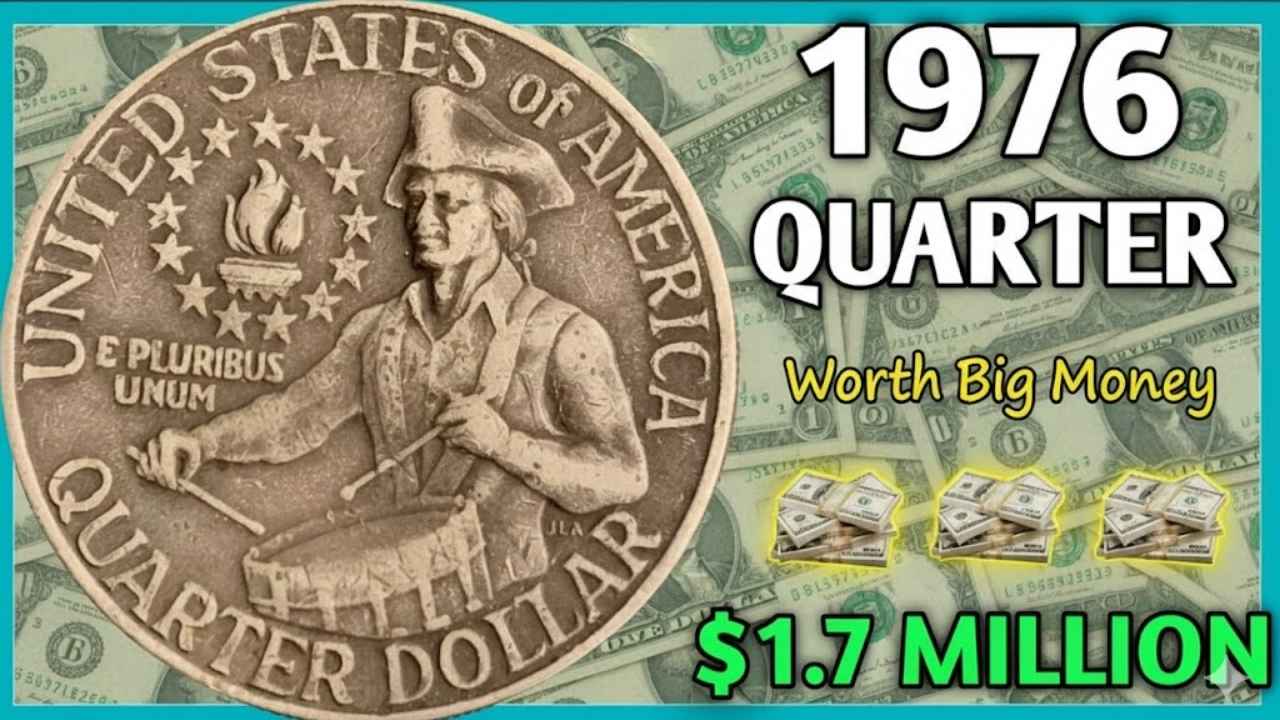
Bicentennial Quarter Error Guide The Bicentennial Quarter was introduced to celebrate America’s 200th anniversary of independence. Struck in 1975 and 1976, it features the dual date 1776–1976 and a colonial drummer reverse design. Produced in copper-nickel clad and 40% silver versions, these coins were minted in massive numbers, but rare errors and varieties can transform them into valuable treasures.
Key Highlights
Collectors searching for valuable Bicentennial Quarters should focus on double die errors, off-center strikes, clipped planchets, wrong planchet strikes, missing clad layers, broadstrikes, misaligned dies, and high-grade silver proofs with cameo contrast.
Understanding the 1776–1976 Bicentennial Quarter
Standard design elements include George Washington’s portrait, the dual date inscription, Jack L. Ahr’s drummer boy reverse, mint marks (D, S, or none), and either copper-nickel clad or 40% silver composition. Most circulating coins were clad, while silver versions were sold in collector sets.
Most Valuable Error Types
Double Die Errors
Visible doubling in lettering or numbers can make a coin worth hundreds to over a thousand dollars.
Off-Center Strikes
Coins struck 10–50% off center with a visible date are highly desirable.
Wrong Planchet Errors
Quarters struck on planchets intended for other denominations are rare and valuable.
Clipped Planchet Errors
Crescent-shaped missing sections create dramatic collector appeal.
Silver Composition Varieties
Special 40% silver versions with the S mint mark and solid silver edges are prized, especially in proof condition.
Condition and Grading Matter
Coins graded MS67 or higher, or proofs with deep cameo contrast, command strong premiums. Strike sharpness, luster, and absence of marks are critical factors.
How to Authenticate a Valuable Error
Authentication requires accurate weight measurement, comparison with verified examples, and submission to a grading service. Professional certification protects both buyers and sellers.
Common Myths to Avoid
Not every Bicentennial Quarter is rare. Most examples remain worth face value unless they feature significant errors or are in exceptional condition.
Where to Sell Valuable Examples
Valuable Bicentennial Quarters are best sold through reputable dealers, major auctions, certified marketplaces, or coin shows. Certification increases buyer confidence and sale prices.
Final Verdict
The Bicentennial Quarter is both a patriotic keepsake and a potential treasure. Only specific errors, silver varieties, and ultra-high-grade examples command serious premiums. Careful inspection, authentication, and grading are the keys to uncovering hidden value in these iconic 1776–1976 coins.
Disclaimer
This guide is for educational purposes only. Coin values fluctuate based on market demand, condition, and grading. Always consult professional numismatic experts before buying or selling rare coins.