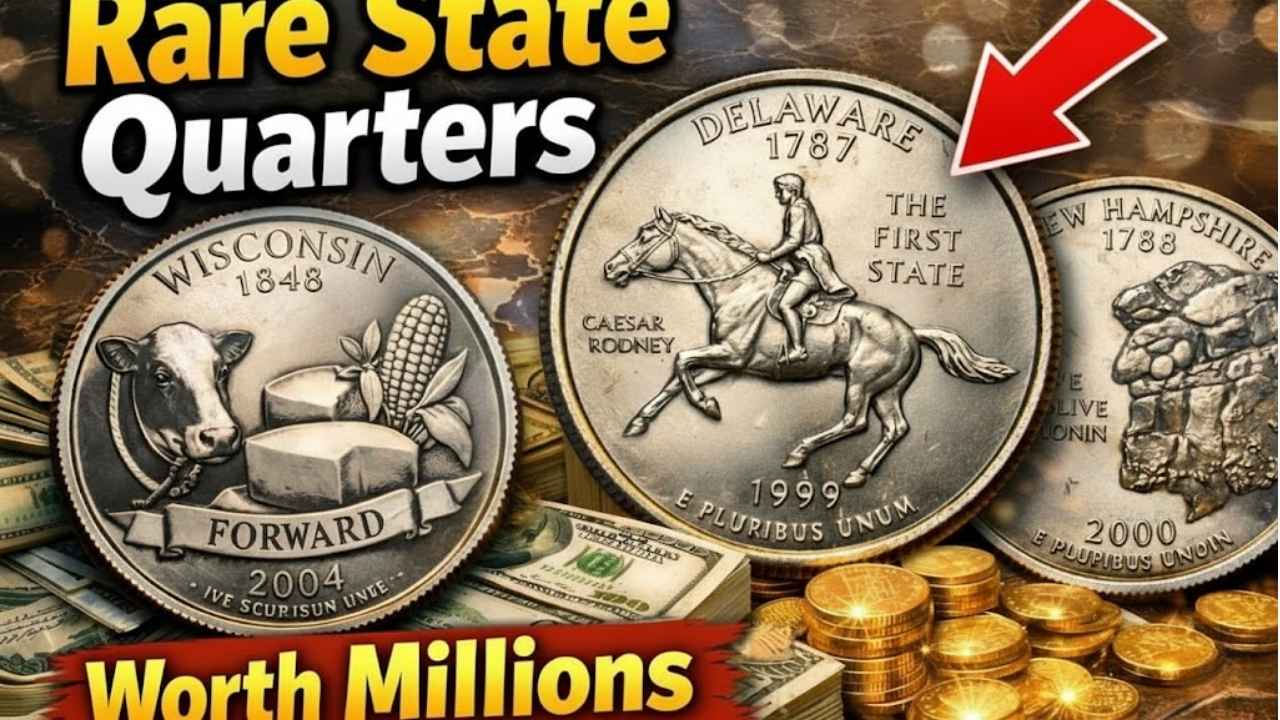
Rare State Quarters Worth Millions When the United States Mint introduced the 50 State Quarters Program in 1999, few imagined it would spark one of the most influential collecting movements in modern numismatics. What began as a commemorative circulation project quickly transformed into a nationwide treasure hunt for rare minting errors, low‑mintage varieties, and hidden design quirks some now commanding staggering prices at auction.
Why State Quarters Became So Valuable
Between 1999 and 2008, five new designs were released each year, honoring states in the order they joined the Union. The program produced over 34 billion coins, engaged millions of casual collectors, and reignited interest in coin collecting across generations. While most remain worth face value, rare anomalies and pristine examples have reached values from thousands to six figures.
Value Highlights of Rare State Quarters
| Quarter & Year | Error/Feature | Estimated Value Range | Why Collectors Prize It |
|---|---|---|---|
| 1999 Delaware | Spitting Horse die crack | $300 – $3,000 | Early die-state error, easy to spot |
| 2004 Wisconsin | Extra Leaf High/Low | $1,000 – $15,000+ | Famous doubled leaf varieties |
| 2005 Minnesota | Doubled Die Trees | $500 – $5,000 | Multiple doubled die varieties |
| 2000 South Carolina | Off-Center Strike | $1,000 – $10,000 | Dramatic misalignment appeal |
| Silver Proofs | 90% silver composition | $50 – $1,000+ | Premium condition and rarity |
The Most Valuable Error Quarters
1999 Delaware Spitting Horse
A die crack extending from the horse’s mouth created one of the earliest and most famous error varieties. High‑grade examples can sell for hundreds to several thousand dollars.
2004 Wisconsin Extra Leaf
Two distinct varieties Extra Leaf High and Extra Leaf Low show additional corn leaves. These coins have sold for thousands, with rare specimens exceeding five figures.
2005 Minnesota Doubled Die
Die doubling in the forest area produced multiple varieties. Collectors prize clear examples, with top‑graded coins reaching several thousand dollars.
2000 South Carolina Off‑Center Strike
Significant misalignment during minting created dramatic off‑center strikes. Coins with visible dates and strong displacement are especially valuable.
Silver Proofs and Special Editions
Not all valuable quarters are errors. Some derive worth from composition and limited mintages. The Mint produced 90% silver proofs and special collector sets. Perfectly graded PR70 examples can command strong premiums.
Condition: The Ultimate Value Multiplier
The difference between a $20 coin and a $20,000 coin often comes down to condition. Collectors seek Mint State grades (MS65+) and Proof grades (PR69–PR70). Professional grading dramatically influences final sale prices.
Hidden History Behind the Designs
Beyond monetary value, state quarters preserve cultural heritage, landmarks, and historical figures. Each design tells a story, making the series one of the most ambitious numismatic storytelling projects in U.S. history.
How to Identify Valuable State Quarters
Check for mint marks, design anomalies, die cracks, off‑center strikes, and silver edges. Using magnification tools and comparing coins to verified examples is essential.
Where Rare Quarters Sell for Big Money
High‑value quarters are sold through major auctions, certified dealers, online marketplaces, and private networks. Prices vary widely depending on grade and demand.
Are There Truly Million‑Dollar State Quarters?
While headlines claim million‑dollar quarters, confirmed multi‑million sales are extremely rare. However, five‑figure and occasional six‑figure sales have occurred for exceptional examples.
Final Verdict
The State Quarters Program remains one of the most exciting entry points into coin collecting. While most are worth 25 cents, rare errors, pristine specimens, and certified varieties can command astonishing premiums. For collectors willing to search rolls, jars, or proof sets, hidden treasures may still be waiting.
Disclaimer
This guide is for educational purposes only. Coin values fluctuate based on market demand, condition, and grading. Always consult professional numismatic experts before buying or selling rare coins.